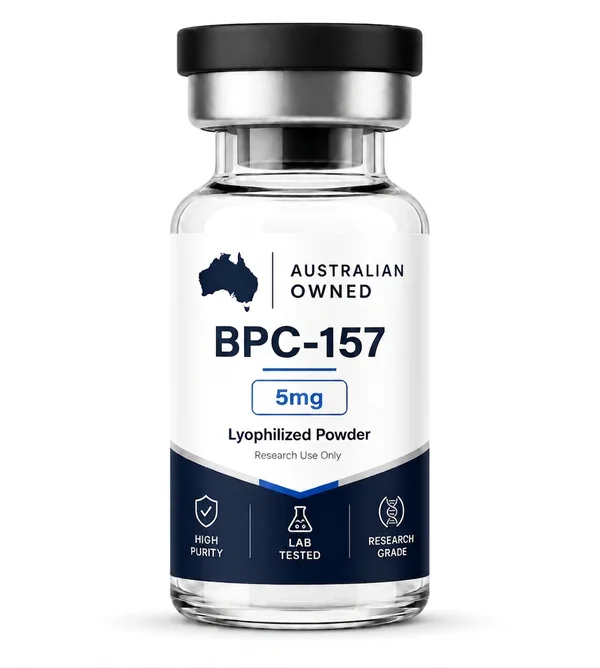
A technical breakdown for Australian investigators conducting a bpc157 buy, focusing on molecular characterisation, peptide stability, and domestic supply chain reliability.
For Australian research institutions, a bpc157 buy represents more than just a procurement task; it is a commitment to experimental precision. The integrity of synthetic pentadecapeptides hinges on rigorous purification processes and the elimination of trifluoroacetic acid (TFA) salts that might otherwise interfere with cellular assays. Securing these materials from a domestic source ensures that the cold chain is maintained and that every milligram aligns with the intended molecular blueprint.
Technical Specifications and Analytical Benchmarks
BPC-157, a sequence comprised of 15 amino acids, demands high-fidelity synthesis to maintain its specific biochemical properties. When evaluating a supplier, researchers must look beyond the label. The presence of truncated sequences or residual solvents can significantly skew data in sensitive in vitro environments.
Identifying High-Quality Peptide Syntheses
- Purity Levels: A minimum threshold of 99% via HPLC is the industry gold standard for replicable research.
- Identity Confirmation: Mass spectrometry must show a peak corresponding to the theoretical molecular weight of BPC-157 (approximately 1419.5 Da).
- Lyophilisation Quality: The 'cake' should be uniform and white, indicating proper moisture removal and long-term stability.
- Solubility: The powder should clear rapidly in sterile diluents without leaving visible particulates.
Verify Current Batch Purity
Before initiating your next study, review the independent lab results for our latest BPC-157 inventory.
Optimising Storage and Reconstitution for Peak Stability
The stability of BPC-157 is highly dependent on its physical state and thermal environment. Lyophilised vials are remarkably stable when kept in deep-freeze conditions, but once transitioned to a liquid phase, the degradation clock begins to accelerate.
| Condition | Physical State | Storage Strategy |
|---|---|---|
| Long-term (1-2 years) | Lyophilised Powder | -20°C or lower, protected from UV light |
| Mid-term (3-6 months) | Lyophilised Powder | 2°C to 8°C (Refrigeration) |
| Working Solution | Reconstituted | 2°C to 8°C; use within 30 days for optimal results |
Best Practices for Reconstitution
Domestic Supply Advantages for Australian Labs
Procuring BPC-157 domestically through Buy Peptides eliminates the variables that often plague international shipping. Customs delays can expose sensitive peptides to extreme temperatures at airport tarmac facilities, compromising the biochemical utility of the batch before it even reaches the lab bench.
Secure Verified Research Peptides
Fast-tracked domestic shipping for all BPC-157 orders across Australia.
Frequently Asked Questions
What documentation comes with a bpc157 buy?
Every order is accompanied by access to batch-specific HPLC and Mass Spec reports, ensuring the identity and purity of the peptide are verified by third-party laboratories.
Why is domestic Australian shipping critical for peptide research?
Local shipping minimises transit time and avoids the unpredictable temperature fluctuations and handling risks associated with international customs inspections.
Can BPC-157 be stored at room temperature?
While lyophilised peptides are relatively stable, room temperature storage is not advised for periods exceeding a few days. For long-term preservation, -20°C is required.
Are there different grades of BPC-157 available?
We only supply research-grade peptides with a verified purity of 98% or higher, specifically intended for laboratory-based biochemical analysis.