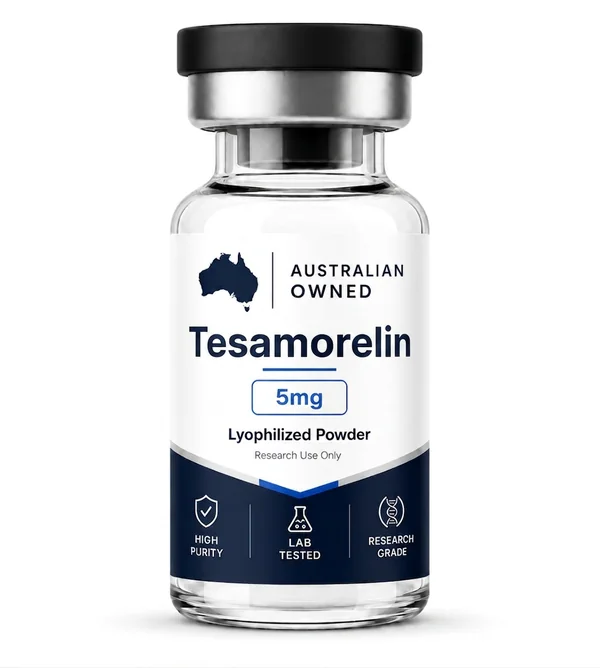
A deep dive into the scientific handling of tesamorelin, covering enzymatic resistance, precise hydration methods, and long-term stability in Australian laboratory settings.
Tesamorelin stands as a sophisticated synthetic analogue of growth hormone-releasing factor, specifically modified at the N-terminus with a trans-3-hexenoic acid moiety. This modification is critical in research as it significantly extends the peptide's half-life by preventing rapid cleavage by dipeptidyl peptidase-4. For Australian researchers, mastering the environmental sensitivities of this analogue is paramount to ensuring data accuracy.
Standardised Storage and Environmental Safeguards
The biochemical stability of tesamorelin is highly dependent on thermal consistency. Before the introduction of diluents, the lyophilised powder requires a controlled climate to prevent premature degradation of the peptide bonds.
- Long-term repository storage should be maintained at -20°C to preserve the structural integrity of the lyophilisate.
- Short-term refrigerated storage (2–8°C) is acceptable for vials scheduled for use within a 4-week window.
- Shield all vials from direct UV exposure and high-intensity laboratory lighting to avoid photo-oxidation.
- Ensure storage units are equipped with consistent temperature monitoring to alert staff of defrost cycles or power failures.
Protocol for Precision Reconstitution
Mechanical stress during the hydration phase is a frequent source of experimental error. Following a precise fluid-dynamics approach prevents the formation of aggregates and ensures a homogenous solution.
- Allow the vial to reach room temperature naturally to avoid condensation inside the glass.
- Introduce the bacteriostatic diluent by aiming the needle at the glass wall, letting the liquid trickle down slowly.
- Avoid any vertical agitation or shaking; instead, use a gentle swirling motion until the solution is completely transparent.
- Visualise the solution under a bright light to confirm the absence of undissolved particulates or cloudiness.
Technical Tools for Australian Research
Verify your dilution ratios or download the latest batch analysis for your specific inventory.
Operational Stability Parameters
| Parameter | Requirement | Scientific Rationale |
|---|---|---|
| Post-Hydration Temp | 2°C to 8°C | Retards thermodynamic degradation and microbial proliferation. |
| Maximum Liquid Life | 28 Days | Ensures peptide potency remains within 5% of initial assay. |
| Diluent Selection | Bacteriostatic Water | Benzyl alcohol content preserves sterility for multiple-draw protocols. |
| Physical Protection | Vibration-free zone | Prevents mechanical shearing of the peptide's secondary structure. |
Inventory Quality Control and Documentation
Reliable science depends on traceability. Every vial of tesamorelin entering the facility should be logged with its specific batch number and matched against the manufacturer's HPLC data. If a study requires high-volume throughput, batch-matching becomes essential to eliminate inter-lot variability that could skew long-term longitudinal data.
Procure Certified Tesamorelin
Ensure your research is backed by high-purity peptides with verified chromatographic profiles.
Common Researcher Inquiries
What indicates that a tesamorelin vial has been compromised?
Physical signs include a 'melted' or discoloured cake in dry form, or persistent turbidity and string-like floaters once reconstituted. Any deviation from a clear, colourless liquid suggests denaturation.
Why is avoiding the freezer necessary for liquid tesamorelin?
Freezing aqueous solutions causes ice crystal formation which exerts physical pressure on the peptide chains, often resulting in permanent structural damage and loss of biological activity.
How does the N-terminal modification affect handling compared to GHRH?
While the modification increases resistance to DPP-4, the peptide remains sensitive to pH shifts and thermal spikes, requiring the same rigorous cold-chain management as standard analogues.
What is the best method for transporting reconstituted vials between labs?
Vials should be placed in a foam-insulated carrier with chilled gel packs, ensuring the glass does not make direct contact with the ice to prevent localised freezing.
Logistics & Scientific Support
Questions regarding shipping durations or payment methods for institutional orders?