A deep dive into the biochemical titration schedules of GLP-1 agonists, examining the standard benchmarks required for metabolic research and laboratory-grade procurement.
The study of Glucagon-like Peptide-1 (GLP-1) receptor agonists necessitates a structured approach to incrementing concentration levels to prevent receptor desensitisation. When academic teams refer to a semaglutide weight loss dosage chart, they are looking for a blueprint to manage biological response curves in controlled laboratory environments. Accurate titration is the cornerstone of observing sustained metabolic shifts without inducing premature saturation in cellular models.
For Australian scientists, the primary challenge often lies in the procurement of high-fidelity reagents. Sourcing materials that meet global analytical standards while navigating domestic logistics requires a vendor that prioritises transparency. At Buy Peptides, we bridge the gap between complex global manufacturing and the specific needs of the Australian research community.
Standard Titration Benchmarks for Metabolic Research
Documented titration sequences usually span a 16-to-20-week period to reach a steady-state maintenance level. This phased escalation allows for the observation of dose-dependent responses. Below is a breakdown of the typical escalation phases utilised in contemporary GLP-1 research settings.
| Research Phase | Duration (Weeks) | Concentration Objective | Primary Focus |
|---|---|---|---|
| Initiation | 1 - 4 | 0.25 mg weekly | Receptor Sensitisation |
| Intermediate I | 5 - 8 | 0.5 mg weekly | Metabolic Modulation |
| Intermediate II | 9 - 12 | 1.0 mg weekly | Pharmacokinetic Observation |
| Advanced Stage | 13 - 16 | 1.7 mg weekly | Near-Maximal Agonism |
| Maintenance | 17+ | 2.4 mg weekly | Steady State Analysis |
Validating Chemical Integrity in Australia
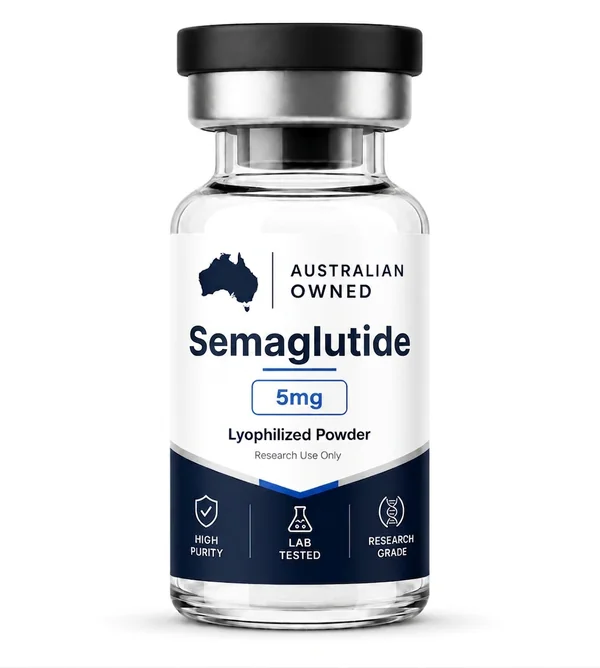
The efficacy of a semaglutide weight loss dosage chart is entirely dependent on the purity of the lyophilised powder. Researchers must ensure that the peptide mass matches the documented concentration to prevent under-dosing or experimental variance.
- Verification of purity via High-Performance Liquid Chromatography (HPLC) showing 98% or higher purity.
- Mass Spectrometry (MS) to confirm the molecular weight aligns with the C187H291N45O59 chemical formula.
- Storage in vacuum-sealed vials to prevent moisture ingress and peptide hydrolysis.
- Local Australian dispatch to avoid long-term heat exposure during international transit.
Order High-Purity Semaglutide
Secure verified, analytical-grade semaglutide for your laboratory, shipped from our Australian warehouse.
Laboratory Reconstitution Logistics
Solvent Selection and Stability
For in vitro studies, the choice of diluent affects the peptide's shelf life. Bacteriostatic water (0.9% benzyl alcohol) is the standard for multi-use research vials, as it inhibits microbial growth that could degrade the semaglutide structure. Once reconstituted, the solution should be maintained at 2°C to 8°C and shielded from UV light to prevent denaturation.
Calculation Accuracy
Miscalculating the volume of diluent is a common source of error in titration studies. Utilising a dedicated calculator ensures that the final concentration (mg/mL) aligns perfectly with the requirements of your semaglutide weight loss dosage chart.
Prepare Your Research Vials
Use our precise tools to determine the exact amount of solvent required for your specific peptide mass.
Frequently Asked Questions
How should Australian labs store semaglutide before use?
Lyophilised peptides should be kept in a freezer at -20°C for long-term stability. For immediate use within several weeks, a standard refrigerator at 2-8°C is sufficient provided the seal is intact.
What documentation is provided with Buy Peptides shipments?
Every batch is accompanied by a Certificate of Analysis (COA) that includes HPLC and Mass Spectrometry data to confirm identity and purity levels.
Why is local Australian shipping critical for GLP-1 research?
Peptides are sensitive to heat. Domestic shipping reduces the time spent in transit and avoids the risk of parcels being held in non-climate-controlled customs warehouses.
Are there specific protocols for peptide handling?
Researchers should avoid vigorous shaking of the vial after adding the diluent. A gentle swirl is recommended to prevent structural shearing of the peptide chain.
Contact Our Technical Support
Need assistance with bulk orders or specific analytical data? Reach out to our Australian team today.