A technical guide for Australian research teams managing ghk cu peptide: establishing rigorous quality control, hydration strategies, and maintaining benchtop stability.
In the landscape of Australian biochemical investigation, ghk cu peptide is frequently prioritised for its unique copper-binding properties and cellular signaling potential. This manual provides a framework for researchers to manage this compound from initial acquisition through to experimental completion, ensuring data remains reproducible and contaminants are excluded.
Success in the laboratory depends on a meticulous chain of custody. By standardising how the ghk cu peptide is verified, hydrated, and stored, facilities can mitigate variables that often lead to inconsistent results in peptide-based assays.
Best Practices for Receiving Laboratory Reagents
Upon arrival at your facility, immediate action is required to preserve the structural integrity of the lyophilised powder. Researchers should follow these intake steps:
- Verify that the physical vial identifier matches the batch number listed on the provided invoice and Certificate of Analysis.
- Assess the vacuum-sealed environment; the lyophilised 'cake' should be firm and free from signs of moisture or collapse.
- Log the arrival temperature if a data logger was included, ensuring it remained within acceptable limits for short-term transit.
- Transfer the vials immediately to long-term storage, ideally at -20°C for dry peptides, to halt any potential degradation.
Analytical Verification and COA Review
Before initiating any protocol involving ghk cu peptide, the analytical profile must be confirmed. Never assume purity without reviewing the specific batch documentation provided by the supplier.
- HPLC Analysis: Ensure a purity rating of >98% to prevent interference from residual synthesis byproducts.
- Mass Spectrometry: Confirm the molecular mass corresponds to the theoretical values for the copper-peptide complex.
- Physical Inspection: Ensure the powder possesses the characteristic blue hue indicative of proper copper chelation.
- Documentation: Archive a digital copy of the COA in your lab's chemical inventory system for future reference.
Researcher Utility Suite
Utilise our technical tools to calculate precise concentrations or verify your batch data.
Reconstitution and Solution Preparation
The transition from a lyophilised state to a liquid solution is the most vulnerable point for the compound. The following table outlines the protocol for preparing a stable working solution.
| Component | Requirement | Reasoning |
|---|---|---|
| Diluent | Bacteriostatic Water | Inhibits microbial growth during the study |
| Temperature | Equilibration to room temp | Prevents thermal shock to the peptide structure |
| Introduction | Slow wall-drip method | Avoids excessive turbulence and foaming |
| Mixing | Gentle rotation | High-shear forces can break molecular bonds |
Acquire Research-Grade Peptides
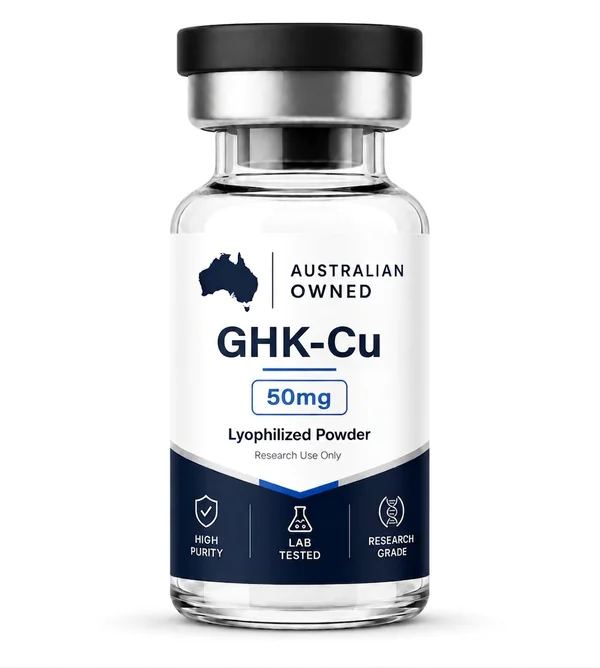
Stock your laboratory with HPLC-tested GHK-Cu, dispatched from our Australian warehouse.
Sample Preservation and Aliquot Management
Once the ghk cu peptide is in solution, its half-life begins to decrease. To maximise utility, labs should adhere to a strict cold-chain protocol. Avoid storing the primary vial for daily use; instead, divide the solution into single-use aliquots. This practice limits the number of times the vial is opened and reduces the risk of accidental contamination. Maintain these samples at 2°C to 8°C and keep them shielded from light to prevent photodegradation.
Frequently Asked Questions for Research Teams
What is the recommended storage for dry ghk cu peptide?
For long-term stability, keep the un-reconstituted powder at -20°C. While stable during transit, refrigerated environments are best for long-term inventory.
Does the blue colour indicate a specific purity level?
The blue hue is a result of copper chelation. While characteristic of ghk cu peptide, actual purity must still be verified through HPLC testing.
How should I manage vials that arrive during hot weather?
Lyophilised peptides are highly stable in transit. However, we recommend immediate refrigeration upon delivery to ensure maximum shelf life.
Is it possible to refreeze the peptide after it has been dissolved?
Refreezing is generally discouraged as it can lead to peptide degradation. Aliquoting into smaller volumes for single-use refrigeration is the preferred method.
Australian Technical Support
Our team is available to assist with logistics, payment queries, and order tracking for your facility.