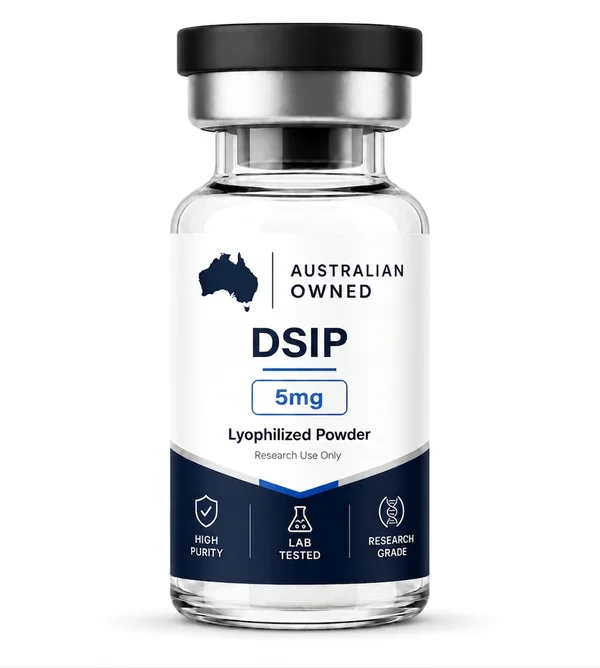
An analytical deep-dive into DSIP, focusing on its biochemical properties, local Australian sourcing advantages, and precise laboratory preparation techniques.
The nonapeptide known as DSIP (Delta Sleep-Inducing Peptide) represents a complex area of study within Australian neurobiology circles. Successfully navigating its experimental potential requires researchers to adhere to meticulous handling and sourcing standards to ensure data integrity.
As synthetic peptide production scales, the necessity for high-resolution analytical data becomes paramount. For Australian scientists, the primary challenge lies in bridging the gap between raw chemical procurement and the high-fidelity results required for publication-quality research.
Stability and Handling Logistics
Preserving the structural conformation of DSIP is critical for maintaining its biochemical activity during in vitro trials. Improper storage or temperature deviations can lead to deamidation or peptide fragmentation, which complicates the interpretation of research outcomes.
- Store dry lyophilised powder at -20°C for long-term preservation.
- Ensure protection from UV light and ambient humidity using desiccant seals.
- Use single-use aliquots for liquid solutions to prevent repeated freeze-thaw degradation.
- Maintain a strict refrigeration window of 2–8°C once the peptide is in a liquid state.
Technical Specifications for Laboratory Analysis
| Quality Indicator | Australian Research Standard | Verification Method |
|---|---|---|
| Chemical Purity | Minimum 98.0% | HPLC Analysis |
| Molecular Identity | Correct Mass Profile | Mass Spectrometry (MS) |
| Physical State | White Lyophilised Solid | Visual Inspection |
| Solubility | Complete in Aqueous Buffer | Manual Reconstitution Test |
Verify Your Research Materials
Access our comprehensive database of analytical reports to confirm the identity of your DSIP lots.
Standardised Reconstitution Framework
Proper hydration of the lyophilised cake is a delicate phase that dictates the final concentration accuracy for your assays. Australian labs are encouraged to follow this systematic approach:
- Clean all workspaces and vials with 70% ethanol to maintain an aseptic environment.
- Accurately calculate the required volume of bacteriostatic water using a precision tool.
- Transfer the diluent into the vial slowly, allowing the liquid to trickle down the glass walls.
- Allow the vial to sit undisturbed for several minutes to facilitate natural wetting.
- Invert the vial gently; never shake or mechanically agitate the solution.
- Label the vial with the date and final concentration for traceability.
Domestic Sourcing and Reliability
Choosing a domestic supplier like Buy Peptides eliminates the risks associated with international logistics, such as Australian Customs delays or inadequate temperature control during transit. Local dispatch ensures that the cold chain remains intact and that research timelines are respected.
Order Research-Grade DSIP
Secure high-purity DSIP for your laboratory with rapid shipping across Australia.
Technical FAQ for Investigators
What is the primary method for confirming DSIP purity?
High-Performance Liquid Chromatography (HPLC) is utilized to ensure every batch meets the required purity threshold for laboratory use.
How long does DSIP remain stable after dilution?
When reconstituted in bacteriostatic water and stored at 2–8°C, the solution is generally stable for experimental use for approximately one month.
Why is domestic Australian shipping preferred for peptides?
Local shipping reduces transit time and environmental exposure, ensuring the lyophilised structure remains intact upon arrival at the research facility.
Is this compound suitable for animal trials?
No, these materials are intended exclusively for in vitro laboratory analysis and are not for veterinary or human applications.