
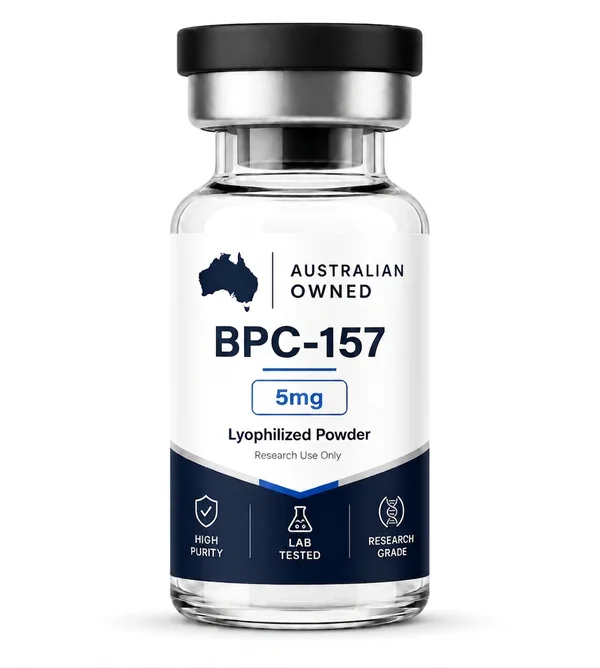
A comprehensive look at the tolerability of BPC-157 in scientific literature, focusing on the necessity of analytical purity to prevent experimental outliers.
Scientific inquiries into the pentadecapeptide BPC-157 have largely focused on its regenerative potential, yet understanding the documented scope of bpc 157 side effects in a laboratory setting is equally critical for data integrity. Current peer-reviewed literature, primarily involving rodent models and cellular cultures, suggests a remarkably low incidence of adverse reactions when the compound is administered within established experimental ranges. These studies have not flagged significant systemic toxicity or histological damage to vital organs, though researchers must remember these findings are restricted to the preclinical domain.
In the context of Australian laboratory environments, many supposed 'side effects' recorded during pilot studies are often attributed to exogenous contaminants rather than the BPC-157 molecule itself. Impurities such as residual solvents, synthesis catalysts, or truncated peptide sequences can trigger inflammatory responses in test subjects, muddling the research outcomes. Therefore, the acquisition of ultra-pure, verified reference materials is the only way to ensure that observed biological responses are authentic.
Analytical Verification: Essential Quality Indicators
| Quality Metric | Laboratory Significance | Required Threshold |
|---|---|---|
| Chromatographic Purity | Ensures absence of synthesis byproducts | ≥98% via HPLC |
| Mass Validation | Confirms the identity of the peptide chain | ESI-MS consistency |
| Visual State | Indicates proper lyophilisation and stability | Uniform white cake |
| Batch Traceability | Links the physical vial to its specific COA | Unique Lot Number |
Critical Sourcing Checklist for Investigators
- Always demand a batch-specific Certificate of Analysis rather than a generic document.
- Verify that the HPLC report shows a clean baseline without significant unknown peaks.
- Ensure the peptide was stored and transported under temperature-controlled conditions to prevent degradation.
- Check that the supplier provides domestic Australian shipping to avoid the degradation risks of international transit.
Secure Authenticated BPC-157 for Your Project
Access high-purity BPC-157 standards with verified HPLC/MS data, shipped from our Australian facility.
Differentiating Quality from Low-Cost Alternatives
The Australian research landscape often sees a disparity in peptide pricing. While budget-oriented options exist, they frequently bypass the rigorous third-party testing necessary to rule out contaminants that cause false bpc 157 side effects. Investing in analytical-grade peptides ensures that your laboratory's budget is spent on reliable data rather than troubleshooting results caused by sub-standard reagents. Buy Peptides bridges this gap by providing high-tier standards with the convenience of local logistics.
Optimising Experimental Reliability in Australia
- Utilise a precise reconstitution calculator to ensure concentration accuracy.
- Maintain a cold chain for all reconstituted samples to prevent structural shearing.
- Perform baseline assessments on all subjects to distinguish pre-existing conditions from experimental variables.
- Audit all incoming batches for molecular weight concordance.
Technical Tools for Peptide Research
Review our COA library or use our precision tools to prepare your next assay.
Research Sourcing & Safety FAQ
Has BPC-157 shown toxicity in animal models?
Current preclinical data indicates that BPC-157 is well-tolerated in rodents, with no reported lethal dose established in standard toxicology screenings. However, human clinical safety data is still pending.
How can I be sure the peptide is pure?
Every batch should be accompanied by High-Performance Liquid Chromatography (HPLC) results. A purity level of 98% or higher is the industry standard for legitimate research applications.
Are there specific storage requirements for these peptides?
For long-term stability, lyophilised peptides should be kept at -20°C. Once reconstituted, they require refrigeration at 2-8°C and should be used within a limited window to ensure potency.
What is the typical shipping timeframe within Australia?
We utilise express domestic couriers, usually resulting in delivery to most Australian research hubs within 1 to 3 business days, minimizing environmental exposure.
Can these peptides be used for veterinary purposes?
No. These compounds are strictly for in-vitro laboratory research and are not intended for therapeutic use in animals or humans.
Partner with Australia's Leading Peptide Supplier
Get the reliability your research demands with our domestic inventory and transparent testing protocols.