
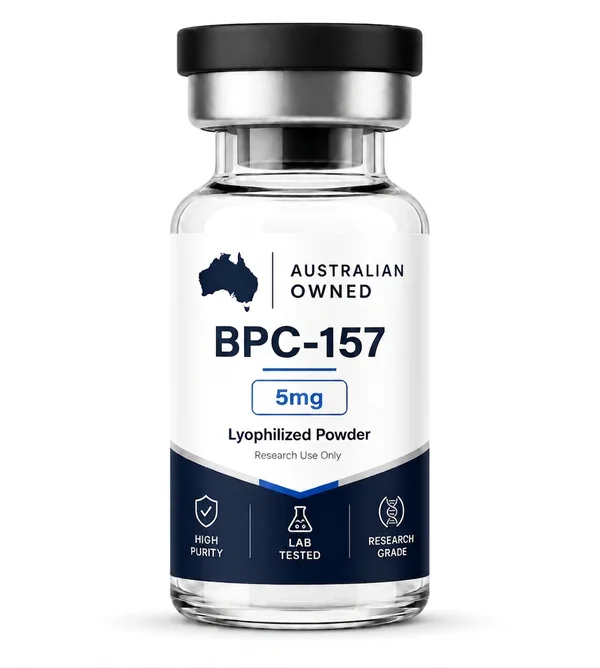
A technical evaluation of BPC-157 concentration variables in academic literature, focusing on laboratory reconstitution standards and batch-specific validation.
Academic exploration of the synthetic pentadecapeptide BPC-157 reveals a broad spectrum of experimental concentrations across various animal models and cellular environments. Because this peptide interacts with diverse physiological systems—from gastric mucosa to musculoskeletal tissues—identifying an appropriate bpc 157 dosage requires a meticulous review of peer-reviewed data. For researchers in Australia, maintaining precision during the transition from lyophilised powder to aqueous solution is paramount for achieving reproducible results.
Analytical Integrity in Preclinical Settings
The efficacy of a research protocol is fundamentally limited by the chemical consistency of the peptide batch. Before calculating a working bpc 157 dosage, laboratory personnel must confirm the material's purity and identity. Variations in synthesis, such as residual salts or moisture content, can skew the net weight of the peptide, leading to inaccurate molarity in the final assay.
Quantifying Experimental Volumes
Literature involving rodent models frequently documents quantities ranging from 10 nanograms to 10 micrograms per kilogram of body weight. The specific concentration chosen often reflects the intended duration of the study and the specific repair mechanism being observed, such as tendon-to-bone healing or the stimulation of angiogenic factors like VEGF.
Standardise Your Dilution Protocols
Access our digital tools to ensure precise concentration levels for your laboratory trials.
Validated Preparation and Storage Procedures
Maintaining the structural integrity of BPC-157 during the reconstitution phase is critical. Mechanical stress or thermal fluctuations can lead to peptide degradation, compromising the validity of the research data. Below are the standard benchmarks for handling these compounds in a controlled laboratory environment:
| Parameter | Action or Specification | Reasoning |
|---|---|---|
| Temperature Balance | Equilibrate vials to 20°C before opening | Prevents condensation and moisture contamination |
| Solvent Introduction | Slow drip via the inner glass wall | Minimises foaming and preserves peptide bonds |
| Mixing Technique | Gentle swirling only; avoid vortexing | Protects against mechanical shear stress |
| Light Protection | Store in amber vials or dark containers | Prevents photo-degradation of the aqueous solution |
Shelf-Life and Thermodynamic Stability
- Lyophilised Stability: Vials should be kept at -20°C for long-term storage to prevent deamidation.
- Aqueous Viability: Once dissolved in bacteriostatic water, BPC-157 remains stable at 2–8°C for up to six weeks.
- Aliquot Management: To avoid damaging freeze-thaw cycles, researchers should divide the solution into single-use portions immediately after preparation.
Research Logistics in the Australian Market
Procuring high-quality compounds within Australia ensures that research materials are not subjected to the unpredictable conditions of international shipping. Localised distribution through Buy Peptides allows for rigorous cold-chain management from the point of synthesis to the final laboratory destination. This infrastructure supports Australian science by providing immediate access to HPLC-verified BPC-157 and comprehensive technical documentation.
Secure Research-Grade BPC-157
Order domestically for verified purity and rapid dispatch to your Australian institution.
Laboratory FAQ: BPC-157 Handling
How is the chemical purity of BPC-157 verified for Australian studies?
We utilise High-Performance Liquid Chromatography (HPLC) and Mass Spectrometry to confirm that every batch exceeds 98% purity and matches the correct molecular mass.
What is the recommended diluent for maintaining solution stability?
For most in vitro or animal models, 0.9% bacteriostatic water is preferred as it contains a preservative that inhibits microbial growth for up to 42 days.
Can BPC-157 be stored at room temperature once it arrives?
While the lyophilised powder is stable during short-term transit, it must be transferred to -20°C upon receipt for long-term storage or 2–8°C if reconstituted.
What documentation is provided to support research reproducibility?
Each shipment includes a Certificate of Analysis (CoA) providing specific data on purity levels and batch identification to assist in formal reporting.