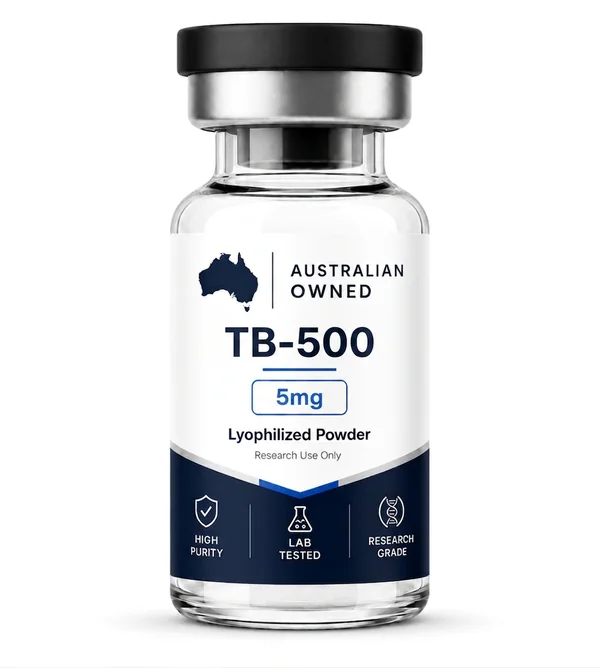
An investigative overview of Thymosin Beta-4 (TB-500) chemical properties and the rigorous benchmarks required for Australian research-grade peptide acquisition.
Thymosin beta 4 is a highly conserved protein consisting of 43 amino acids that functions as the primary sequestering agent for G-actin in eukaryotic cells. Within the Australian scientific community, this molecule is frequently studied via its synthetic analogue, TB-500, to observe its role in cellular migration and cytoskeletal regulation. Because of its complex structure, maintaining chemical stability during synthesis and transport is a critical concern for laboratory managers.
Primary Specifications for Thymosin Beta-4 Research
When sourcing reagents for sensitive assays, researchers must distinguish between standard commercial grade products and high-purity analytical standards. Inconsistent purity levels can introduce confounding variables that compromise the integrity of longitudinal data. The table below outlines the mandatory thresholds for valid thymosin beta 4 research materials.
| Quality Metric | Required Standard | Laboratory Significance |
|---|---|---|
| Chromatographic Purity | ≥ 98% via HPLC | Ensures absence of truncated peptide sequences |
| Molecular Identity | MS Verified | Confirms correct amino acid sequence and mass |
| Physical State | Lyophilised Powder | Optimal for long-term thermodynamic stability |
| Shelf Life | 12-24 Months | Stored at -20°C to preserve bioactivity |
Logistical Advantages of Local Australian Distribution
Acquiring thymosin beta 4 from within Australia mitigates several risks associated with international chemical transport. External factors such as customs-induced delays or exposure to extreme temperatures in uncontrolled shipping hubs can degrade the sensitive 43-amino acid chain.
- Elimination of international regulatory bottlenecks and unpredictable import duties.
- Reduction in 'time-in-transit' preventing degradation of the lyophilised cake.
- Guaranteed trackable express shipping to major research hubs like Sydney, Melbourne, and Brisbane.
- Access to Australian-based customer support for technical COA inquiries.
Source Validated Research Reagents
Access our current inventory of Thymosin Beta-4 and review comprehensive batch-specific analysis.
Verifying Analytical Documentation
A legitimate Certificate of Analysis (COA) for thymosin beta 4 should provide more than just a summary percentage. It must include the actual HPLC chromatogram showing a clear, distinct peak with minimal baseline noise. If a supplier cannot provide a batch-specific report that matches the lot number on your vial, the reagent's purity cannot be scientifically verified.
Preparation and Reconstitution Protocols
For in vitro applications, the manner in which the lyophilised powder is handled determines the success of the experiment. Rapid temperature changes or vigorous mechanical agitation should be avoided. Researchers typically utilize sterile bacteriostatic water or buffered saline for reconstitution, ensuring the solution is handled under aseptic conditions.
Technical Tools for Investigators
Determine precise concentrations for your laboratory protocols with our digital tools.
Research Procurement FAQ
How is the molecular mass of Thymosin Beta-4 confirmed?
Mass Spectrometry (MS) is used to verify that the synthetic peptide's weight aligns with its theoretical molecular structure, ensuring no errors occurred during synthesis.
Can I obtain bulk quantities for long-term study?
Yes, we facilitate larger procurement requests for institutional researchers. Please reach out to our team via the contact portal for volume-based logistics.
What payment methods are available for Australian labs?
We support various secure channels including bank transfers and major cards. Detailed instructions are found on our payment page.
How are the peptides protected during summer transit?
We use thermal-insulated packaging and express domestic networks to ensure the lyophilised products remain stable even during typical Australian heatwaves.
Ready to Proceed with Procurement?
Contact our team for dispatch timelines or browse our complete collection of research-grade compounds.