A technical overview of the copper-binding tripeptide ghk cu, focusing on analytical validation, domestic procurement, and proper aqueous stability for Australian researchers.
The tripeptide GHK (glycyl-L-histidyl-L-lysine) has gained significant attention in Australian laboratory settings due to its high affinity for copper ions. When complexed as ghk cu, this molecule becomes a focal point for investigating extracellular matrix remodelling, gene expression modulation, and oxidative stress responses in diverse in vitro models.
For scientific data to remain valid, researchers must account for the chemical stability and purity of their reagents. In the context of ghk cu, ensuring that the copper saturation is consistent across batches is vital for maintaining reproducible outcomes in cellular signalling assays.
Verification Criteria for GHK-Cu Research
Relying on generic product descriptions is insufficient for high-level biochemical analysis. Australian investigators prioritise reagents that undergo rigorous third-party verification to confirm both identity and purity before the commencement of any longitudinal study.
- Mass Spectrometry (MS): Essential for confirming the exact molecular mass of the ghk cu complex.
- High-Performance Liquid Chromatography (HPLC): Used to determine the percentage of purity and detect any residual synthesis byproducts.
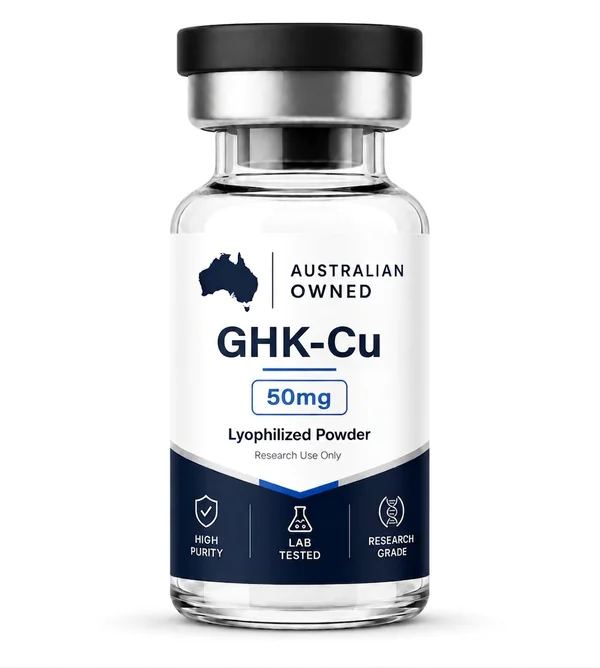
- Visual Inspection: Lyophilised ghk cu should typically present as a fine, light-blue powder, reflecting the presence of the copper ion.
- Batch Traceability: Every vial should be linkable to a specific Certificate of Analysis (COA) generated for that production run.
Analyse Batch Quality
Access our comprehensive library of independent laboratory reports for all current peptide batches.
Optimised Reconstitution and Dilution
The transition from a lyophilised state to an aqueous solution requires precision to avoid degrading the peptide chain. The following table outlines the standard parameters used in Australian research facilities when preparing ghk cu for benchtop use.
| Parameter | Requirement | Rationale |
|---|---|---|
| Diluent | Bacteriostatic Water | Prevents microbial growth during multi-day assays |
| Temperature | Room Temp (21°C) | Prevents thermal shock and condensation inside the vial |
| Fluid Delivery | Wall-streaming | Minimises mechanical agitation and peptide shearing |
| Visual Check | Clear Blue Liquid | Indicates successful dissolution and complex integrity |
Calculation and Molarity
Accurate dosing in a lab environment depends on the concentration of the stock solution. Researchers often use digital tools to determine the precise volume of diluent required to reach their target micromolar concentrations.
Precision Measurement Tools
Utilise our laboratory calculator to determine exact reconstitution volumes for your ghk cu vials.
Thermal Stability and Storage Protocol
The longevity of ghk cu is dictated by its environment. Environmental factors such as UV exposure and fluctuating temperatures can break the delicate peptide bonds or disrupt the copper chelation.
- Store unopened, lyophilised vials at -20°C for long-term preservation (up to 24 months).
- Protect vials from light by using amber glass or dark storage boxes.
- Keep reconstituted solutions refrigerated strictly between 2°C and 8°C.
- Avoid the use of frost-free freezers for long-term storage as temperature cycling can damage the peptide structure.
- Limit the duration of exposure to ambient light during experimental procedures.
Sourcing GHK-Cu in Australia
Selecting a domestic supplier like Buy Peptides mitigates the risks associated with international logistics, such as customs delays and the degradation of temperature-sensitive materials during long-haul transit. Domestic inventory ensures that the cold chain is maintained more effectively from the warehouse to the Australian laboratory.
Sourcing for Australian Research
Direct dispatch of ghk cu from domestic inventory to ensure reagent integrity and rapid delivery.
Technical FAQ: GHK-Cu Lab Procedures
What is the physical appearance of high-purity ghk cu?
In its lyophilised (freeze-dried) state, pure ghk cu typically appears as a light-blue crystalline powder. Once reconstituted, it should form a transparent blue solution without visible particulates.
Why is purity testing critical for copper peptides?
Impurities can interfere with the copper-binding sites, potentially altering the biological activity of the molecule in an assay and leading to skewed experimental data.
How long is ghk cu stable once in solution?
When stored at 2-8°C in sterile bacteriostatic water, the peptide generally maintains its integrity for research purposes for approximately 4 to 6 weeks.
Does Buy Peptides provide mass-spec data?
Yes, we provide batch-specific Mass Spectrometry and HPLC data to confirm the chemical identity and purity of all ghk cu dispatched.
Explore the Research Catalog
Browse our full range of research-grade peptides and biochemical reagents.