A deep dive into the biochemical properties of CJC-1295 With DAC and the technical standards required for reliable Australian laboratory studies.
The chemical profile of cjc 1295 with dac is defined by its specific Drug Affinity Complex (DAC) technology, which utilizes a linker to form a covalent attachment with plasma albumin. This structural modification radically alters the peptide's metabolic half-life compared to standard GHRH analogues, providing a unique model for studying prolonged growth hormone secretagogue activity. For Australian researchers, selecting a high-fidelity variant of this compound is essential for maintaining experimental control.
Understanding DAC Conjugation and Stability
The inclusion of the maleimidopropionic acid moiety ensures that cjc 1295 with dac avoids the rapid enzymatic degradation typically observed in the circulatory system. In a laboratory setting, this extended stability allows for different observation windows than those provided by non-conjugated peptides. However, the integrity of this covalent bond depends entirely on the synthesis precision and the purity of the lyophilised powder provided by the supplier.
Critical Quality Markers for Researchers
- Verification of Mass Spectrometry (MS) to confirm the exact molecular weight of the DAC-conjugated sequence.
- HPLC chromatograms showing high purity levels, typically exceeding 98%.
- Evidence of professional lyophilisation to ensure the powder remains stable during short-term thermal shifts.
- Confirmation that the reagent is stored in a temperature-monitored Australian facility prior to dispatch.
Secure Analytically Verified Research Reagents
Access batch-tested cjc 1295 with dac with guaranteed purity for your next laboratory project.
The Risk Profile of International vs. Domestic Sourcing
Procuring cjc 1295 with dac from overseas introduces significant variables that can compromise scientific data. Extended time in transit, exposure to X-rays at customs, and fluctuating temperatures during air freight can lead to peptide denaturation. By contrast, a domestic Australian supply chain provides a shorter custody chain, ensuring that the biochemical properties documented at the time of synthesis are preserved until the vial reaches the lab.
| Procurement Factor | Domestic Research Standard | International Risks |
|---|---|---|
| Transit Duration | 1-3 business days within Australia | 10-21 days with potential border holds |
| Temperature Control | Climate-monitored local storage | Uncontrolled exposure to tarmac heat |
| Analytical Proof | Batch-specific COA matching the vial | Generic or recycled documentation |
| Support Access | Direct Australian technical help | Delayed or absent overseas communication |
Protocol for Validating Research Shipments
When receiving a new batch of cjc 1295 with dac, investigators should follow a strict intake procedure to ensure the validity of their subsequent data. This includes visual inspection of the vacuum seal, verifying the batch number against the Certificate of Analysis, and using precise tools for reconstitution to avoid damaging the peptide chains.
Technical Tools for Laboratory Precision
Utilise our scientific calculators and review our library of analytical data to support your methodology.
Australian Research FAQ: CJC-1295 With DAC
What distinguishes cjc 1295 with dac from the Mod GRF version?
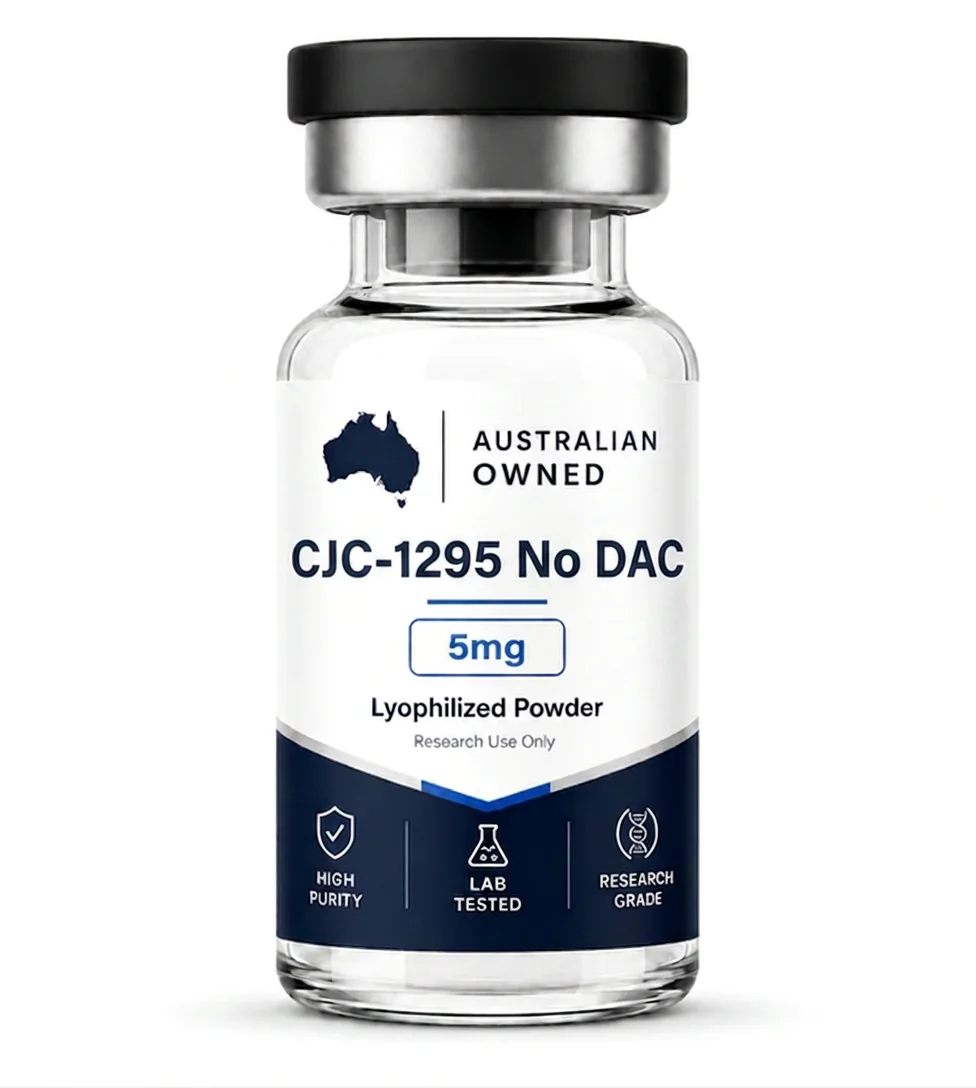
The primary difference lies in the Drug Affinity Complex, which enables covalent bonding to albumin, significantly extending the duration of action compared to the shorter-lived Mod GRF (CJC-1295 No DAC).
How should this peptide be handled upon arrival at the lab?
Vials should be kept in a cool, dark environment. Once reconstituted with bacteriostatic water, they must be refrigerated and used within the timeframe dictated by your specific experimental protocol.
Why is purity testing so critical for this specific conjugate?
Because DAC conjugation involves a complex synthesis step, verifying that no unreacted precursors or truncated sequences remain is vital for ensuring experimental accuracy.
Can I track the delivery of my research materials?
Yes, all domestic shipments are fully tracked to ensure researchers can monitor the custody chain from our warehouse to their facility.
Contact the Australian Technical Support Team
Need assistance with bulk procurement or specific batch inquiries? Our local team is ready to help.