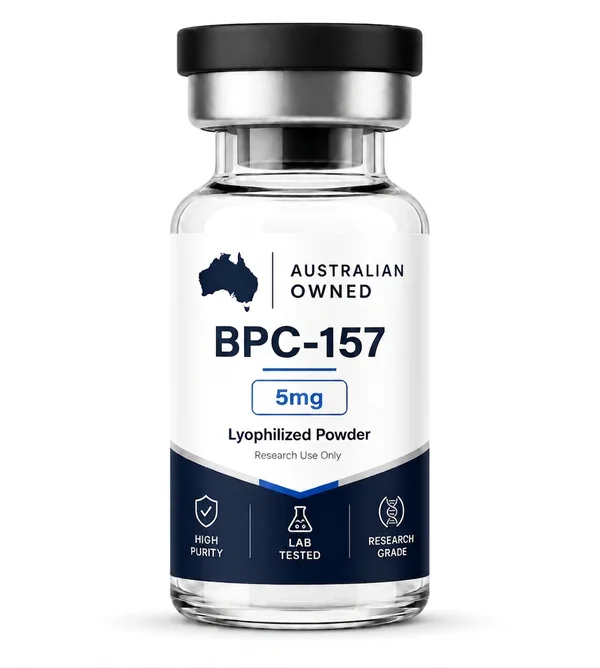
A technical assessment of BPC-157 and TB-500 for Australian researchers, covering molecular differences, stability requirements, and procurement standards.
For Australian research facilities investigating regenerative biology, the bpc 157 and tb 500 buy process requires more than just a transaction; it demands a commitment to chemical precision. These two compounds, while often grouped together in wound-healing literature, operate via distinct molecular mechanisms that necessitate specific handling and storage protocols to maintain experimental validity.
The integrity of a laboratory's findings hinges on the quality of its reagents. In the Australian landscape, sourcing locally through Buy Peptides ensures that the distance between synthesis and the lab bench is minimised, protecting the delicate lyophilised structures of these specific peptide fragments.
Divergent Biological Pathways: BPC-157 vs. TB-500
While both molecules are studied for their roles in tissue repair models, their interactions with the extracellular matrix differ significantly. BPC-157, a pentadecapeptide, is frequently tracked for its ability to upregulate growth factor receptors and modulate nitric oxide. Conversely, TB-500 (a synthetic version of the active region of Thymosin Beta-4) is primary studied for its actin-sequestering properties, which facilitate the migration of cells to damaged sites.
Synergistic Potential in In Vitro Models
Many investigators utilise both compounds within a single assay to observe multi-modal repair signals. Because BPC-157 influences angiogenesis through different pathways than TB-500's cellular migration signals, their combined presence can provide a more comprehensive view of complex tissue regeneration dynamics in a controlled environment.
Verify Your Research Materials
Confirm the sequence identity and purity of your reagents using our comprehensive testing library.
Quality Control Specifications for Researchers
When establishing a bpc 157 and tb 500 buy workflow, researchers should mandate the following documentation to ensure the reproducibility of their data:
- High-Performance Liquid Chromatography (HPLC) results showing >98% purity.
- Mass Spectrometry (MS) to verify the precise molecular weight of the peptide chain.
- Lot-specific manufacturing dates to track shelf-life efficacy.
- Evidence of vacuum-sealed lyophilisation to prevent moisture-induced degradation.
Standard Laboratory Reconstitution Procedure
To maintain the bioactivity of the peptides, follow these precise steps during the transition from lyophilised powder to liquid solution:
| Step | Action | Technical Note |
|---|---|---|
| 1 | Temperature Equalisation | Allow vials to reach room temperature to avoid condensation upon opening. |
| 2 | Aseptic Preparation | Clean all surfaces and the vial septum with 70% ethanol. |
| 3 | Diluent Addition | Slowly introduce bacteriostatic water down the side of the glass. |
| 4 | Solubilisation | Swirl gently; never shake, as mechanical stress can denature the peptide. |
Optimising Storage for Longevity
The stability of BPC-157 and TB-500 is highly sensitive to thermal fluctuations. For long-term preservation, lyophilised vials should remain in a freezer at -20°C. Once reconstituted, the solution must be stored between 2°C and 8°C. Exposure to UV light should be avoided, as it can cause photo-degradation of the amino acid sequences.
Secure Your Lab's Supply
Choose Buy Peptides for consistent, high-purity sequences dispatched from within Australia.
Assay Sourcing FAQ
Why is domestic Australian shipping preferred for these peptides?
Local dispatch avoids the extreme temperature variations and prolonged transit times associated with international customs, preserving the delicate molecular structure of the lyophilised powder.
What is the typical shelf life of these compounds once in solution?
When reconstituted with bacteriostatic water and kept under refrigeration (2-8°C), the peptides generally remain stable for up to 6 weeks for research purposes.
How can I confirm the purity of a specific batch?
Researchers can access our COA Library to download the HPLC and Mass Spec reports corresponding to their specific lot number.
What is the difference between TB-500 and the full Thymosin Beta-4 protein?
TB-500 is a synthetic fragment representing the most active part of the protein, specifically designed for higher precision in laboratory assays.
Technical Support & Inquiries
Need assistance with batch tracking or laboratory standards? Contact our Australian team.